Microsoft stock (MSFT) took a hit on Friday. You'd think a company expanding a core growth service would see, if not a pop, then at least stability. But no. The market had other ideas, even as Xbox Cloud Gaming officially rolled out in India on November 11, 2025. This wasn't some minor update; it marked India as the 29th market for the service, opening up a massive, underserved demographic. Yet, the ticker tape told a different story.
It’s a classic disconnect, isn’t it? The strategic move, the long-term vision, versus the immediate, often irrational, market sentiment. My job, as I see it, is to figure out why those two data points aren't aligning.
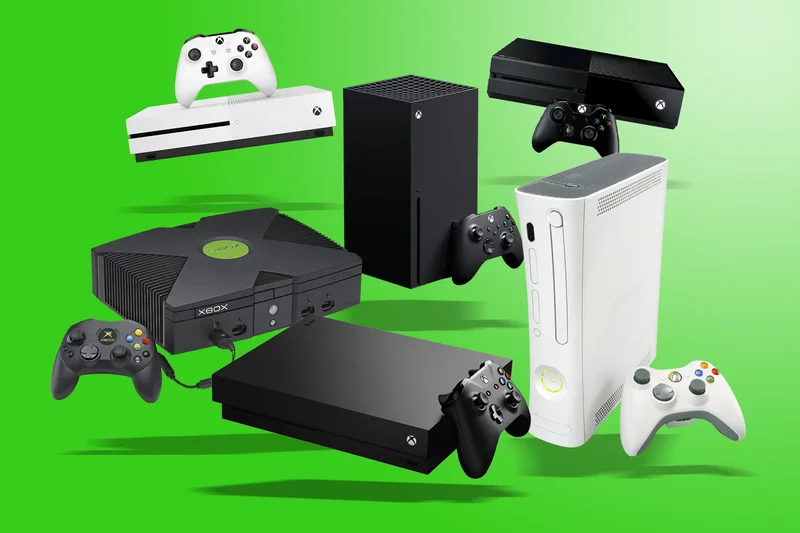
Let's unpack the strategic play first. Xbox Cloud Gaming, for those who haven’t been tracking, is Microsoft's subscription-based game streaming service. It’s a pretty clever workaround, really: instead of buying a beefy console or PC, Xbox Game Pass subscribers can stream hundreds of titles directly to a host of devices. We’re talking Xbox consoles, PCs, handhelds, mobile phones, even select LG and Samsung Smart TVs, and compatible Amazon Fire TV Sticks/Cube. It’s about accessibility, about meeting gamers where they are, not where Microsoft wants them to be.
The India launch is a big deal, strategically. India ranks around 7th globally for gaming spend—to be more exact, some estimates put it closer to 6th in terms of active player base, though spend per user remains a different metric entirely. This isn't just about adding another dot on a global map; it’s about tapping into a population known for its mobile-first approach and a rapidly growing appetite for digital entertainment. Prior to the official launch, Microsoft had already laid the groundwork, with Xbox Cloud Gaming server stacks observed in their Central India Azure data center (Pune, Maharashtra) and the South India data center (Chennai, Tamil Nadu). That’s a significant infrastructure investment, indicative of a serious long-term commitment.
And let's not forget the technical upgrades. We’re seeing 1440p resolution and boosted bitrate now, sometimes even surpassing the quality of Xbox Series X|S console remote play. The "Stream Your Own Game" feature supports over 2100 titles. This isn't some beta-level offering; it's a polished product. So, from a product and market expansion standpoint, everything looks, on paper, like a win. Microsoft's cloud infrastructure, built on Azure, gives them a global expansion advantage that their competitors can only dream of.
So, why the Friday dip? This is where the numbers get interesting, and the narrative gets murky. You could practically hear the collective shrug from traders on Wall Street. It's like a finely tuned engine getting a shiny new spoiler, but the stock still stalls. My analysis suggests the market isn't just looking at what Microsoft did, but how much it will move the needle in the short term, and what the competitive landscape really looks like.
For one, the cloud gaming space is no longer a wide-open field. NVIDIA GeForce Now, with its industry-leading GPUs, offers a high-resolution, premium streaming experience that’s tough to beat on raw graphical fidelity. Then you’ve got Sony’s PlayStation Plus, a pioneer in this game thanks to its Gaikai acquisition, now bolstered by the PlayStation Portal, their dedicated cloud gaming handheld (though, let’s be clear, that thing still requires a PS5 for initial setup, which feels a bit like having a car that needs another car to start). All three services, including Xbox Cloud Gaming, are still wrestling with the mobile store policies of Apple and Google, which limits direct app integration and monetization on the most ubiquitous gaming devices.
This is where, frankly, I start to get a little antsy with the narrative. We hear about "hundreds of titles," which is great. But what's the actual engagement with those titles in a new market like India? Are we talking about high-ARPU players diving into `Minecraft` or `Fortnite`, or a broader, lower-spend casual audience just trying out `Roblox`? The press release doesn’t break down projected user acquisition costs versus average revenue per user (ARPU) for these new territories, and that’s the data the market really wants. Without it, this expansion, however strategically sound, looks like an investment with an unclear immediate return, a long-term play that doesn't justify a short-term bump.
And this is my methodological critique: we’re told India is a massive market, but what’s the actual conversion rate from curious browser to committed Xbox Game Pass Ultimate subscriber? The different tiers—Essentials, Premium, Ultimate—all have varying access and queue priorities. Will the basic tiers, with their "lowest queue priority," create a bottleneck that frustrates new users before they even get hooked? The market isn't just buying the idea; it's buying the execution and the immediate financial impact. And right now, the data available suggests the market isn't convinced the immediate impact is positive enough to outweigh other, perhaps more concerning, economic indicators or competitive pressures.
The stock dip isn't a condemnation of the strategy, but a cold, hard data point reflecting market skepticism about the short-term ROI. It's a reminder that even the most logical strategic moves need to demonstrate tangible, near-term value to appease the Street. For all the talk of cloud gaming's future, investors are still focused on today's balance sheet.