IonQ. The name alone conjures images of futuristic computing power, a leap beyond the silicon-based constraints of our current digital age. But behind the glossy presentations and breathless investor reports, what does the data actually say?
The narrative is compelling: Quantum computing is the next frontier, and IonQ, with its trapped-ion approach, is a leading contender. Morgan Stanley's Joseph Moore recently upped his price target on IONQ to $58, citing expectations of a "solid revenue beat" and a "bullish outlook." (Moore, it's worth pointing out, is a five-star analyst with a 61% success rate.) This optimism stems, in part, from recent technology development agreements signed by the Trump administration with the UK, Korea, and Japan – agreements that specifically mention quantum technology. IONQ Stock Wins a Price Target Hike from Top Analyst Ahead of Q3 Results
But let's inject a dose of reality. While revenue is projected to surge 118% year-over-year to $26.99 million, Wall Street also expects IonQ to post a loss of $0.44 per share. This isn't unique to IonQ; competitors like D-Wave Quantum (QBTS) and Rigetti Computing (RGTI) are also bleeding cash. The reason? Heavy investment in research and development, a necessary evil in this nascent industry.
IonQ's method, using trapped ions, is touted as more economical than the superconducting approach, as it operates at room temperature. However, "economical" is a relative term when you're still posting substantial losses.
A recent analysis from November 2025 (nearly a year from now, according to the source material – a slight temporal anomaly, perhaps?) notes that IONQ stock has declined by 20.3% over 21 trading days. The question posed: is this a buying opportunity or a warning sign?
The data provides a mixed message. IonQ is described as a $15 billion company with $52 million in revenue, trading at $58.40. That's a price-to-sales ratio of roughly 288. Extremely rich, to say the least. Revenue growth is strong, reported at 67.8%, but the operating margin is a staggering -700.6%.
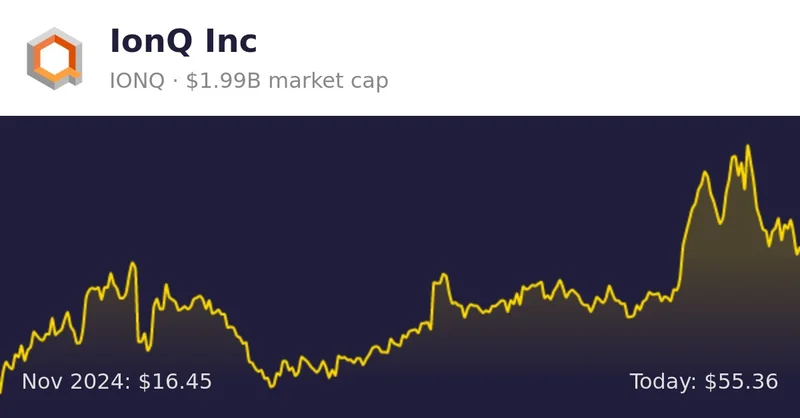
The analysis further highlights IonQ's Debt to Equity ratio of 0.0 and a Cash to Assets ratio of 0.4. The P/E multiple is -31.6, and the P/EBIT multiple is -39.9. These numbers paint a picture of a company with no debt, decent liquidity, but generating massive losses relative to its earnings and revenue.
I've looked at hundreds of these filings, and an operating margin of -700% is…unusual. The author of the analysis raises a crucial point: what happens if IONQ drops another 20-30%? Would investors be able to maintain their positions? The article correctly identifies that IONQ has historically performed worse than the S&P 500 during economic downturns. Buy Or Sell IonQ Stock?
Here's a key question the data doesn't explicitly answer: how much of IonQ's current valuation is based on actual technological progress versus the promise of future quantum dominance? And how much of that promise is already baked into the stock price?
The analysis also points out that IONQ stock declined by 90% from a high of $31.00 on November 17, 2021, to $3.10 on December 27, 2022, during the 2022 inflation shock. It did, however, recover to pre-crisis peaks by November 21, 2024, and reached a high of $82.09 on October 13, 2025. This volatility suggests a stock highly sensitive to macroeconomic conditions and investor sentiment.
IonQ presents a fascinating paradox. The technology is undeniably groundbreaking, and the potential market is enormous. But the current valuation seems divorced from the company's current financial realities. The stock's wild swings, its sensitivity to market downturns, and its reliance on future promises rather than present profits all point to a high-risk, high-reward investment. The question isn't whether quantum computing will transform the world, but whether IonQ will be the company to lead the charge – and whether you're willing to pay a premium for that possibility.